

Building wealth rarely happens because of one perfect investment. For most families, it happens through a series of good decisions made at the right times: buying a home without stretching too far, protecting income, saving for college, investing consistently, managing taxes, and eventually turning savings into retirement income.
For families in Colleyville, those decisions can become more complicated as income and net worth grow. Higher earnings create more opportunities, but they also create more moving pieces. A strong financial plan should connect those pieces so each decision supports the life you are trying to build.
That is why financial planning should not start at retirement. It should evolve with your family from the first major purchase through the years when work becomes optional.
Stage 1: Buying a Home Without Sacrificing Everything Else
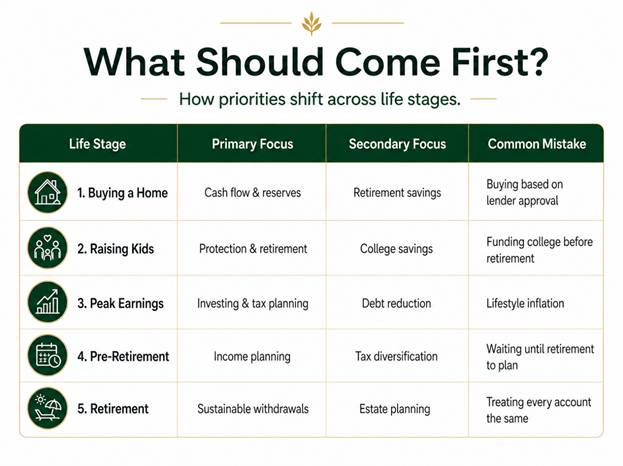
A home often becomes the first major financial commitment for a growing family. The challenge is deciding how much house fits your financial plan, not simply how much a lender will approve.
Mortgage payments only tell part of the story. Property taxes, insurance, maintenance, repairs, furnishings, landscaping, and renovations can materially increase the real cost of homeownership. A house can fit the bank’s debt-to-income formula and still make the rest of your financial life feel tight.
Before buying, look at the entire cash-flow picture. How much will remain each month for retirement savings, emergency reserves, childcare, travel, college funding, and other priorities after the home purchase?
The down payment deserves careful thought too. Putting more money down can reduce the mortgage, but draining most of your liquid savings can leave you vulnerable. A family may be better served by keeping a healthy cash reserve instead of putting every available dollar into the house.
The goal is not to buy the biggest house possible. The goal is to buy a home you can enjoy while continuing to build wealth outside of it.
Stage 2: Protecting the Family While Wealth Is Still Growing
As careers advance and children arrive, financial planning becomes less about individual goals and more about protecting the household.
An emergency fund remains important, but insurance and estate planning start to matter much more. Term life insurance can protect a surviving spouse and children if one parent dies during the family’s highest-earning years. Disability insurance can protect the income that funds the mortgage, savings, and lifestyle.
Families should also review basic estate documents. A will, powers of attorney, medical directives, guardianship provisions, and updated beneficiary designations can help make sure your wishes are followed if something happens to you.
This stage can feel busy because everything happens at once. Careers are growing, children need time and money, and houses require work. A coordinated plan can help keep short-term demands from crowding out long-term goals.
Stage 3: Balancing Retirement, College, and Lifestyle
For many Colleyville families, the 30s and 40s create a difficult balancing act. You may want to save aggressively for retirement, fund college for multiple children, pay down the mortgage, travel, improve the house, and still enjoy your life now.
You usually cannot maximize every goal at the same time. Good planning helps you decide what deserves priority.
Retirement savings often need to stay near the top of the list because you cannot borrow for retirement. Workplace plans such as a 401(k) can provide tax advantages, employer contributions, and an automated way to build long-term wealth.
College funding can then fit around the retirement strategy. A 529 plan may provide tax-free growth when the money goes toward qualified education expenses, and consistent contributions can reduce the pressure to fund college out of current cash flow later.
A financial planner in Colleyville, Texas should help you model these tradeoffs instead of simply telling you to save more. The plan should show what happens if you fully fund college, partially fund it, retire earlier, buy a second home, or increase lifestyle spending.
Numbers become more useful when they connect directly to real choices.
Stage 4: Making the Most of Your Highest-Earning Years
The 40s and 50s often become the most important wealth-building years. Income may reach its highest level while some early-career expenses become easier to manage.
This is where tax planning and investment coordination can create meaningful value.
Families should review how much they contribute to pre-tax retirement accounts, Roth accounts, taxable investment accounts, health savings accounts, and other savings vehicles. The best mix depends on income, tax brackets, future retirement expectations, and access to employer plans.
As assets grow, investment management also deserves more attention. A portfolio that started as a few funds in a 401(k) can eventually spread across retirement plans, brokerage accounts, company stock, real estate, and cash. Each account may look reasonable on its own while the combined portfolio takes more risk than you intended.
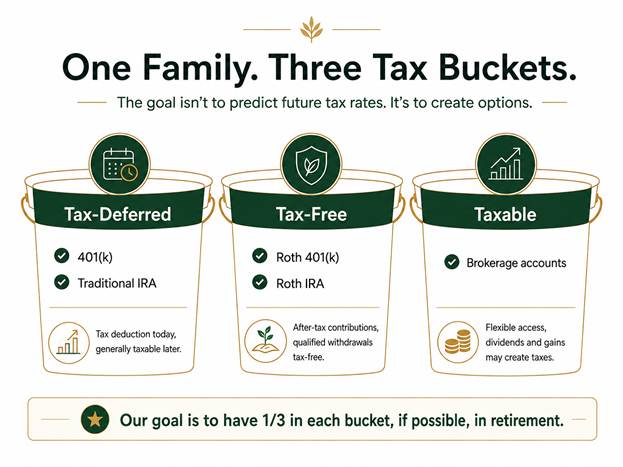
Tax diversification matters too. If nearly every retirement dollar sits in tax-deferred accounts, future withdrawals may create a larger taxable income stream. Building assets across pre-tax, Roth, and taxable accounts can give you more flexibility later.
For business owners and executives, this stage can become even more complicated. Equity compensation, concentrated stock, business value, deferred compensation, and retirement plans can all affect the strategy. A financial advisor in Colleyville should coordinate those decisions instead of treating each account separately.
Stage 5: Preparing for the Retirement Transition
Retirement planning changes when retirement moves from a distant goal to something five or ten years away.
At that point, the question is no longer simply how much to save. The bigger issue becomes how all of your assets will produce a sustainable lifestyle when the paycheck stops.
Start by estimating what retirement will actually cost. Include normal monthly spending as well as travel, healthcare, home projects, vehicles, gifts, taxes, and other irregular expenses. Then compare those needs with Social Security, pensions, retirement accounts, taxable investments, business proceeds, real estate income, and other resources.
This is also the time to review investment risk. A family in its 30s can usually recover from a major market decline through years of future earnings and contributions. A family about to retire has less time to recover if it needs to withdraw money during a downturn.
That does not mean retirees should move everything to cash. It means the investment strategy should reflect the timing and purpose of the money.
Retirement tax planning also becomes more important before required distributions begin. Depending on the situation, families may have opportunities to manage taxable income, consider Roth conversions, coordinate charitable giving, and plan withdrawals across different account types.
The years just before and just after retirement can create some of the best planning opportunities because you may have more control over where your income comes from.
Stage 6: Turning a Financial Plan Into a Retirement Income Plan
Retirement requires a different mindset. During your working years, income arrives first and you decide where to save it. In retirement, your investments often need to create the income.
A retirement income plan should answer practical questions. Which account should fund monthly spending? When should Social Security begin? How much cash should you keep? When should you sell investments? How will large expenses affect taxes?
The plan should also account for a retirement that could last 25 or 30 years. That usually requires a balance between maintaining enough stability for near-term spending and enough long-term growth to protect purchasing power.
For many families, retirement planning also becomes estate planning. Once you know that your assets can support your own lifestyle, you can think more intentionally about children, grandchildren, charitable goals, and the legacy you want to leave.
That may involve gifting strategies, trusts, beneficiary planning, charitable giving, or simply organizing your financial life so your family can manage it more easily later.
Financial Planning Should Change as Your Life Changes
The most important feature of a financial plan is not the spreadsheet you receive on day one. It is the ability to adjust when life changes.
A new job can change income and benefits. A business sale can change the family balance sheet overnight. A child may choose an expensive college, earn a scholarship, or skip college entirely. Parents may need financial help. A market decline may arrive just before retirement.
Your plan should absorb those changes without forcing you to start over every time.
That is why financial planning works best when the investment strategy, tax strategy, retirement plan, insurance, estate plan, and cash flow all connect. Decisions in one area often affect several others.
The value of a financial planner is not simply choosing investments. It is helping your family understand the financial consequences of the decisions you already face.
My Final Thoughts
Families build wealth over decades, not in one moment. The decisions that matter at 35 look different from the decisions that matter at 55 or 70, but each stage affects the next.
A good financial plan gives you a framework for those decisions. It helps you enjoy the home you worked for, protect your family, educate your children, build wealth, manage taxes, and eventually retire with confidence.
If you are looking for a financial advisor, look for someone who can help you connect all of those stages instead of focusing on a single account or investment.
The objective is simple: make today’s financial decisions in a way that gives your family more choices tomorrow.
Find Out Which Stage You’re Actually In
Most families are further along in one area than another — retirement savings on track, estate documents ten years stale, or a portfolio that grew into more risk than anyone chose. A planning conversation starts by finding those gaps. Our office is in Southlake, about ten minutes from most of Colleyville. Contact us today to schedule a discovery call.