
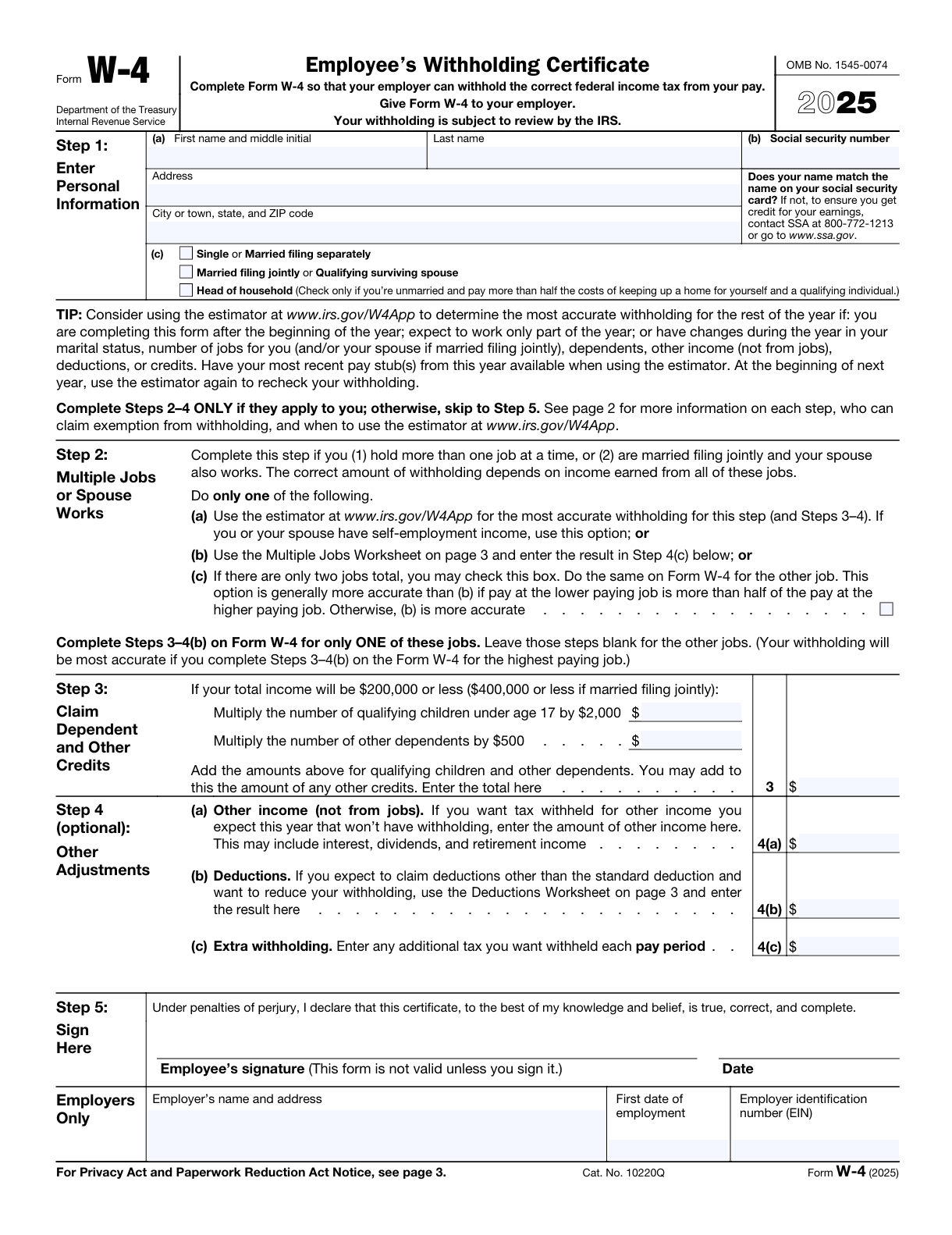
Last month, I met with a woman who thought she was “taken care of” when it came to her taxes. She had a CPA, a solid income, and a W-4 on file she hadn’t touched in years. But when tax season rolled around, the IRS disagreed. She ended up paying a $1,300 penalty because she underpaid her taxes throughout the year without realizing it.
And she’s not alone.
As a financial advisor who works with business owners and high-income professionals, I see this mistake all the time.
Why Your W-4 Might Be Setting You Up for an Underpayment Penalty
Most people assume their W-4, the document that tells your employer how much tax to withhold, is set up correctly. But it’s not a “set it and forget it” form. Life changes, income changes, and the tax code changes. If you haven’t revisited your W-4 in years, there’s a good chance it’s no longer accurate.
Even smart, diligent people get caught off guard because the W-4 is tricky by design. It’s filled with small boxes and vague questions that make it easy to underpay or overpay without realizing it. The IRS doesn’t adjust your withholding automatically when your income changes. You have to do it yourself.
Year-End Self-Check: Are You On Track to Avoid an IRS Penalty?
The good news is there’s still time to fix this before December 31st.
Here’s a simple way to see if you’re on track:
- Pull your most recent pay stub.
- Divide your year-to-date (YTD) federal income taxes paid by your YTD income.
The result is your effective withholding rate, the percentage of your income withheld for taxes so far this year. - Compare that rate to your average tax rate from last year’s return.
If you expect to earn more in 2025, make sure you’re paying at least 110% of last year’s total federal tax bill through withholdings and estimated payments.
If your income is the same or lower, aim for 90% of this year’s expected tax.
These two simple benchmarks, 110% and 90%, can help you avoid the IRS underpayment penalty. It’s not about perfection; it’s about staying inside the safe harbor rules.
Underpayment Risks for Business Owners and Multi-Income Professionals
If you’re a business owner juggling K-1s, W-2s, or multiple income streams, the math gets trickier. Different income sources can cause uneven withholding throughout the year, making it easier to fall short without noticing.
The solution is to run a quick projection before year-end. Look at your total income and taxes paid so far, estimate what the next two months will add, and adjust your final payments if necessary. A short review now can save thousands later.
Act Before December 31 — Don’t Wait Until Tax Season
If you’ve ever been surprised by a tax bill or a penalty, you’re not alone. But you don’t have to repeat it. Small course corrections before December 31st can have a big impact.
I’ll be breaking this process down step-by-step and sharing other year-end strategies in my Free Master Class on November 14th.
You’ll walk away with actionable ways to lower your tax bill, strengthen your cash flow, and finish the year financially stronger.
👉 Learn more here: https://event.webinarjam.com/nxlw1/register/pvznwu9
Think you might owe a penalty this year? Schedule a quick tax review to make sure you’re not tipping the IRS in 2025.