

Running a business in Grapevine brings opportunity and complexity. Smart tax planning helps you keep more of what you earn, manage cash flow with confidence, and make better long term decisions. The key is to stay proactive, not reactive.
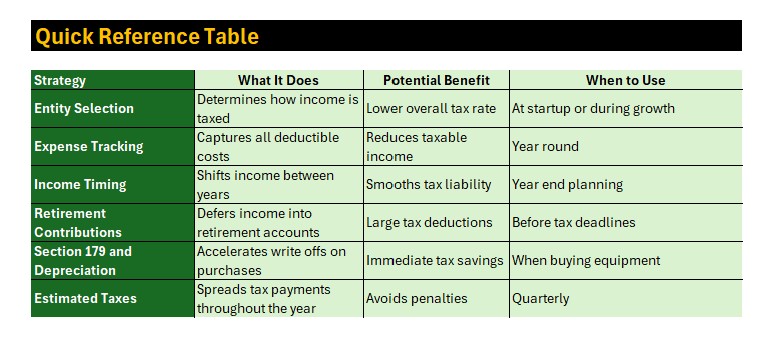
Below is quick reference table and a practical guide to help you navigate tax planning throughout the year.
Why Tax Planning Matters
Tax planning is not just about filing a return. It shapes how you operate your business.
Strong planning can help you:
- Reduce your overall tax liability
- Improve cash flow during the year
- Avoid penalties and surprises
- Align your business goals with your personal financial plan
When you treat taxes as part of your strategy, not an afterthought, you gain control.
Key Tax Strategies for Small Business Owners
1. Choose the Right Business Structure
Your entity type directly impacts how much you pay in taxes.
- Sole Proprietorship: Simple, but all income is subject to self employment tax
- LLC: Flexible, can elect different tax treatments
- S Corporation: Potential savings on self employment taxes with proper salary structure
- C Corporation: Lower corporate rate, but double taxation risk
Review your structure regularly as your income grows.
2. Track Every Deduction
Many business owners leave money on the table. Consistent tracking is critical.
Common deductions include:
- Office expenses and supplies
- Software and subscriptions
- Marketing and advertising
- Business use of your vehicle
- Home office expenses
- Professional services
Accurate records support your deductions and reduce audit risk.
3. Time Your Income and Expenses
You can influence your tax bill by controlling timing.
- Delay income into the next year if you expect lower tax rates
- Accelerate expenses into the current year to reduce taxable income
- Make strategic purchases before year end
This approach works especially well for cash basis businesses.
4. Maximize Retirement Contributions
Retirement plans offer some of the most powerful tax benefits.
Options include:
- Solo 401k
- SEP IRA
- SIMPLE IRA
- Defined benefit or cash balance plans for higher income earners
These plans can significantly reduce taxable income while building long term wealth.
5. Take Advantage of Section 179 and Bonus Depreciation
If your business needs equipment, timing matters.
- Section 179 allows you to expense qualifying purchases immediately
- Bonus depreciation can accelerate deductions even further
This strategy can create large upfront tax savings when used thoughtfully.
6. Plan for Estimated Taxes
Many business owners struggle with quarterly payments.
Stay ahead by:
- Setting aside a percentage of income for taxes
- Reviewing income each quarter
- Adjusting payments as needed
Consistency prevents large tax bills and penalties.
Local Considerations for Grapevine Business Owners
Operating in Grapevine and the broader DFW area brings unique advantages:
- No state income tax in Texas
- Strong local economy supporting small businesses
- Access to professional networks and advisors
However, federal taxes still require careful planning, especially as your business grows.
Final Thoughts
Tax planning is not a one time event. It is an ongoing process that evolves with your business.
The most successful business owners:
- Review their tax strategy regularly
- Coordinate with financial and tax professionals
- Align tax decisions with long term goals
If you stay proactive, you can turn tax planning into a competitive advantage rather than a burden.