One of my clients got an email from his accountant. No call. No heads up. Just an email that said he owed $300,000 in taxes and where to send the check. He had a great year. Business was up. Income was strong. By every measure, it was a win. The
If you live in Colleyville, I’d imagine you’ve built a strong income or asset base. As a Colleyville financial advisor, I see that from the outside, everything looks like it’s working. But when I sit down with families in this area, I see the same pattern over and over again.
If you own a business in Southlake, you probably don’t have an income problem. You have a tax problem. Most of the people I meet with are doing well. Revenue is solid, cash flow looks fine, and net worth is heading in the right direction. On paper, everything checks out.
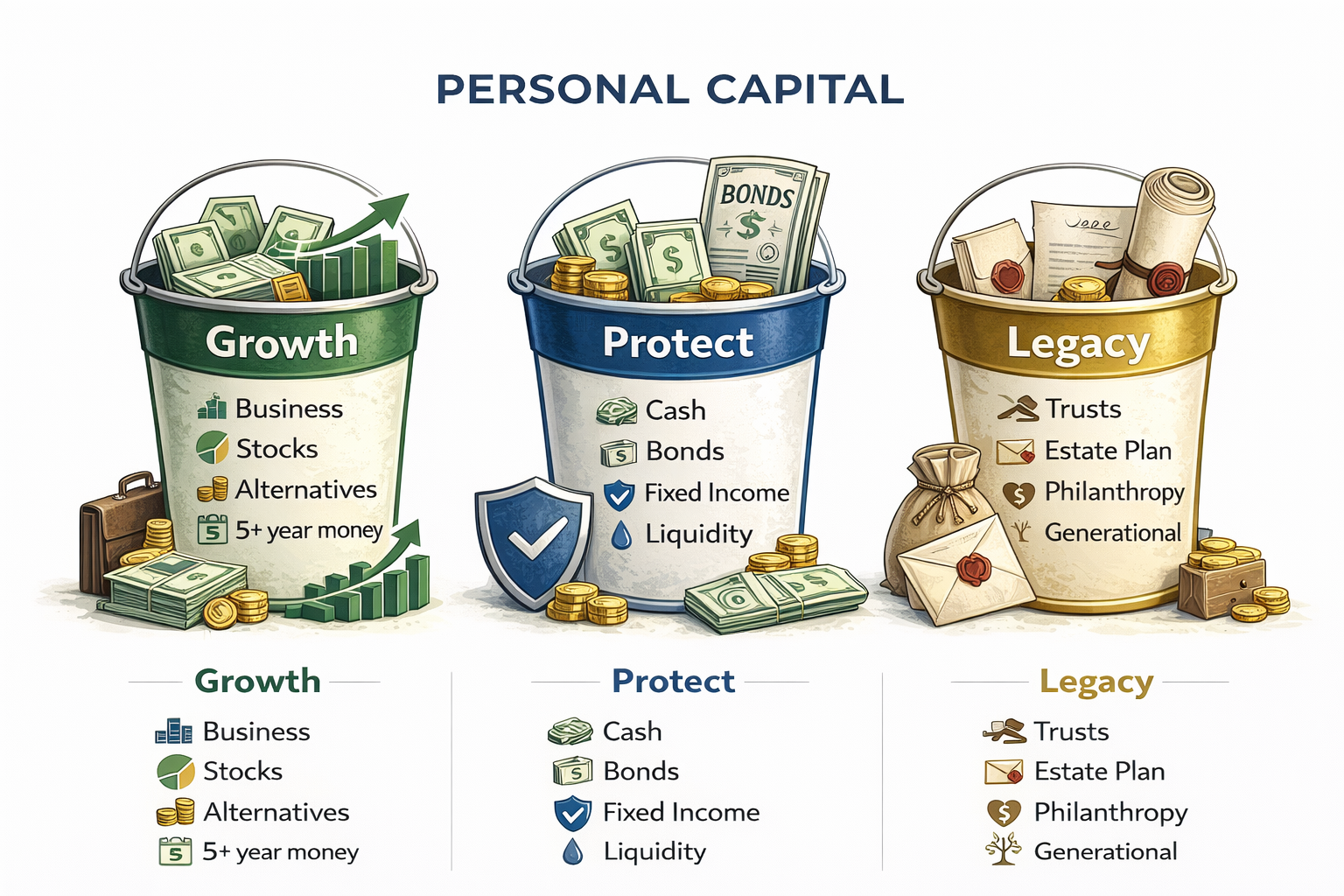
TThree out of five DFW business owners I talk to on a regular basis are on track to go broke by 2030. Not because of AI.Not because they drink too much coffee. Because they don’t understand how to allocate their money. And the frustrating part is these aren’t failing business
Some people lose their wealth slowly. Others lose it all at once. One event, one lawsuit, one situation that escalates faster than anyone expects. If you live in Westlake, you’ve probably done well. You have a nice home, strong income, maybe you own a business, and your kids are involved
Anybody can build wealth. Some people get there through luck. Others grind for decades, take risks, build businesses, and slowly stack assets over time. But regardless of how you got there, there’s a moment that almost no one prepares for properly—the transition from growing wealth to protecting it. And that
If you live in Trophy Club, there’s a good chance you’ve asked yourself this question: “Should I be investing more… or should I just pay off the house?” On the surface, it feels like a math problem. Interest rate vs. market return. But that’s not actually what this is. This
Most business owners are excellent capital allocators inside their companies. They constantly decide where money should go, what projects deserve funding, and which investments will produce the best return. If you ask a founder why they spent $300,000 on equipment or why they hired three new employees, they can usually
If you’re a business owner, you’re probably excellent at allocating capital inside your company. You know when to hire.You know when to cut expenses.You know when to reinvest in growth. Every dollar in your business has a purpose. But when it comes to your personal balance sheet, most founders become
If you’re a business owner, you’re probably very good at allocating capital inside your company. You know when it makes sense to hire someone and when it doesn’t. You know when it’s time to invest in marketing, when to upgrade systems, and when to hold back on spending. Every dollar