
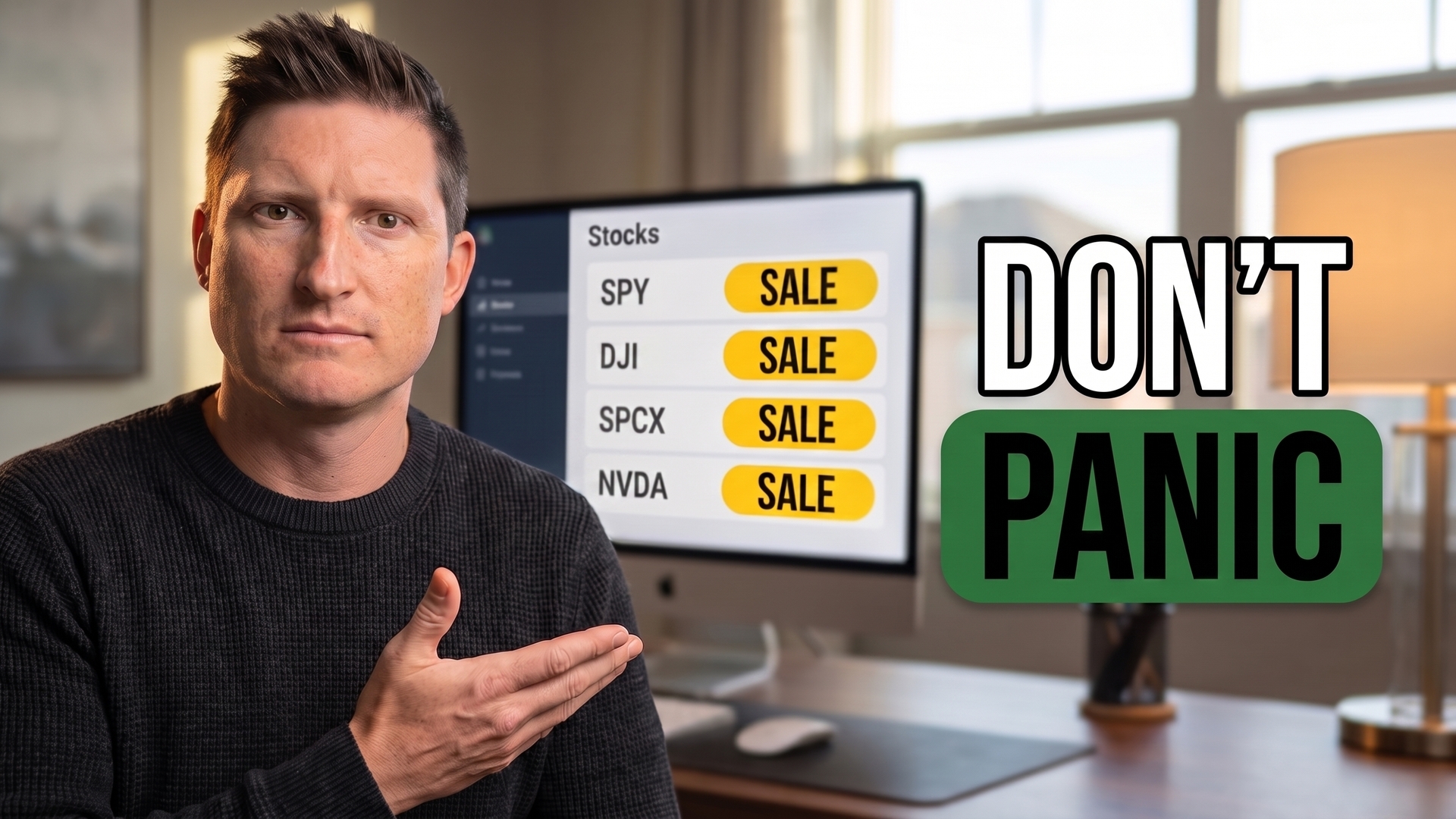
A lot of people are nervous about money right now.
Between political uncertainty, global conflict, oil prices, inflation concerns, and constant market headlines, it is easy to feel stuck. One day it feels like the market could take off. The next day it feels like everything could fall apart.
That uncertainty creates a real problem for investors.
People with cash on the sidelines do not know whether they should invest now, wait for a market drop, or stay safe. People already invested wonder whether they should make changes, reduce risk, or move to cash.
The biggest danger is not always making the wrong decision. Sometimes the bigger danger is making no decision at all.
When people are scared, they freeze. They sit in cash. They wait for the “perfect” time. They tell themselves they will invest once things calm down.
The problem is that things rarely feel calm in real time.
There is almost always something to worry about. Elections. Wars. Interest rates. Inflation. Recessions. Oil prices. Bank issues. Debt ceilings. Market valuations.
If you are waiting for a time when the news feels safe, you may be waiting a long time.
That does not mean you should blindly invest everything tomorrow. It means you need a plan. A real plan gives you a framework for making decisions when emotions are high and the headlines are loud.
Here are three practical steps to consider if you are sitting on cash or unsure what to do with your investments.
1. Know Your Time Horizon
The first question is simple:
When will you need this money?
That one question drives almost everything.
If the money is for a home down payment in six months, it probably does not belong in the stock market. If it is money you may need in the next year, safety matters more than growth. In that case, cash, money market funds, CDs, Treasury bills, or other conservative options may make more sense.
But if this is money you do not expect to touch for five, seven, or ten years, that is a very different conversation.
The longer your time horizon, the more ability you usually have to handle market volatility. A market drop over the next few months may feel painful, but if your money is invested for the next decade, short-term volatility may not be the thing that matters most.
The mistake many people make is that they do not separate their money by purpose. This is the same logic behind the bucket approach to retirement income which divides savings by when you will need it.
They look at one big pile of cash or one investment account and ask, “Should I invest this?”
A better question is, “What is this money for?”
Money for emergencies should be treated differently than money for retirement. Money for a house project should be treated differently than money for long-term wealth building. Money for college in two years should be treated differently than money for retirement in twenty years.
This matters because unexpected expenses happen.
A client may not plan to spend $50,000 on a home repair, but if a leak, roof issue, or insurance gap shows up, that money may suddenly be needed. That is why you cannot only ask when you want to use the money. You also need to ask when you might need it.
Once you understand your time horizon, your investment decision becomes much clearer.
Short-term money should usually be protected.
Long-term money can usually be invested with more confidence.
2. Do Not Feel Like You Have to Invest Everything at Once
Mathematically, investing a lump sum often makes sense because markets tend to go up over time. If you have long-term money, the numbers often support getting invested sooner rather than later.
But math is not the only thing that matters.
Behavior matters too.
If you invest all your cash today and the market drops 10% next month, will you panic? Will you regret the decision? Will you sell at the wrong time? Will you lose confidence in your plan?
That is where a blended approach can help.
Instead of thinking in extremes, you can split the decision.
For example, if you have $100,000 to invest, you might invest $50,000 now and keep $50,000 available to invest later. If the market drops, you have cash ready to take advantage of lower prices. If the market goes up, at least part of your money is already working.
This approach may not be perfect on a spreadsheet, but it can be very effective in real life because it gives you a plan before emotions take over.
You are no longer asking, “What should I do if the market falls?”
You already know.
You are no longer asking, “What if I miss out?”
You already have money invested.
That is the power of having a framework. You remove some of the emotional weight from the decision.
The goal is not to predict the market perfectly. The goal is to make a decision you can actually stick with.
3. Use Dollar Cost Averaging
Dollar cost averaging is one of the simplest and most effective strategies for investors who feel uncertain.
Instead of investing all your money at once, you invest a set amount at regular intervals.
For example, if you have $100,000 to invest, you could invest $8,333 per month for twelve months. If you want to move faster, you could invest it over six months. If you want to be more cautious, you could spread it out over a longer period.
This is the same basic idea behind how many people invest in their 401(k).
Every paycheck, money goes into the account. The market may be up. The market may be down. But the investment happens anyway.
That consistency is powerful.
When the market is high, your fixed contribution buys fewer shares. When the market is down, that same contribution buys more shares. Over time, this can help reduce the pressure of trying to pick the perfect entry point.
Dollar cost averaging also helps with one of the biggest problems investors face: hesitation.
People often sit in cash because they are afraid of investing right before a downturn. Dollar cost averaging does not eliminate that risk, but it spreads it out. You no longer have to be exactly right on one specific day.
You are giving yourself multiple entry points.
If the market falls, you continue investing at lower prices. If the market rises, you are still participating. If the market bounces around, your plan keeps moving.
That is why this strategy can be so useful during uncertain times.
It takes the decision out of your hands and turns it into a process.
Turn Uncertainty Into a Plan
The worst investment strategy is usually the one driven by fear.
Fear causes people to sit in cash too long. Fear causes people to sell during downturns. Fear causes people to chase safety right before the market recovers.
A good plan does not mean you know exactly what the market will do next.
Nobody does.
A good plan means you know what you are going to do before the market moves.
Start by identifying your time horizon. Separate short-term money from long-term money. Do not invest money you may need soon.
Then decide how much should actually go to work. Maybe you invest part of it now and hold part back for a specific opportunity. Or maybe you use dollar cost averaging and invest in equal amounts over the next six to twelve months.
The key is to stop letting the headlines make the decision for you.
The market will always have uncertainty. Your financial plan should not.
My Final Thoughts
If you are sitting on cash and feeling nervous, you are not alone.
But doing nothing is still a decision.
The better approach is to build a plan that matches your goals, your timeline, and your comfort level. Figure out when you need the money. Decide how much should be invested. Then choose whether to invest part of it now, save part for later, or dollar cost average over time.
You do not have to predict the future to make a smart decision.
You just need a strategy you can follow.
If you are sitting on cash and want a second opinion on how to put it to work, schedule a 15-minute intro call with one of our advisors.