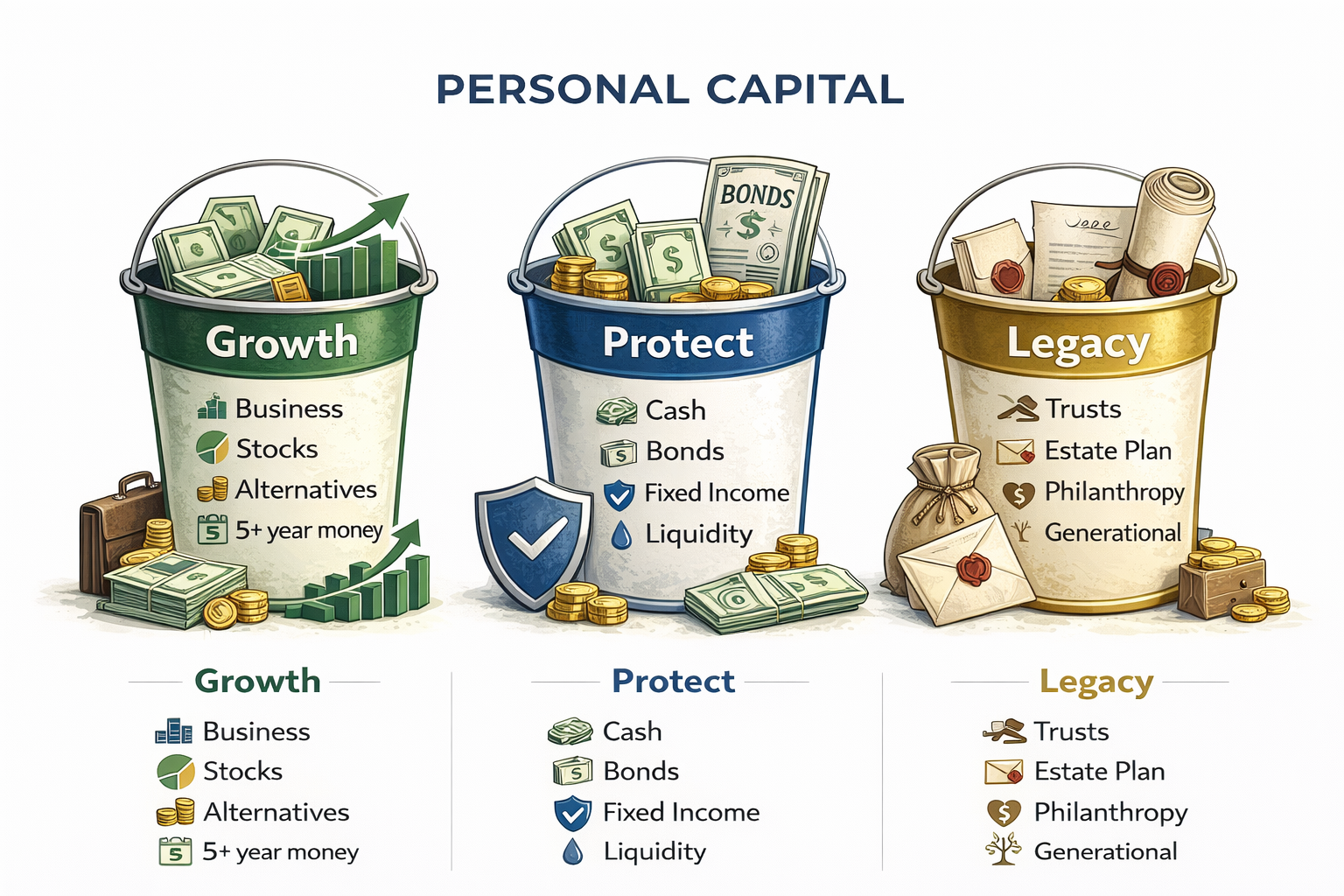
Most business owners are excellent capital allocators inside their companies. They constantly decide where money should go, what projects deserve funding, and which investments will produce the best return. If you ask a founder why they spent $300,000 on equipment or why they hired three new employees, they can usually
If you’re a business owner, you’re probably excellent at allocating capital inside your company. You know when to hire.You know when to cut expenses.You know when to reinvest in growth. Every dollar in your business has a purpose. But when it comes to your personal balance sheet, most founders become
If you’re a business owner, you’re probably very good at allocating capital inside your company. You know when it makes sense to hire someone and when it doesn’t. You know when it’s time to invest in marketing, when to upgrade systems, and when to hold back on spending. Every dollar
While most business owners are aware of standard income and capital gains taxes, there are actually several taxes business owners pay that fly under the radar. But there’s another tax quietly sitting in the background that catches a lot of successful people by surprise. It’s called the Net Investment Income
If you ask most business owners what taxes they pay, the answer is usually the same: And while those are certainly real, they are only part of the picture. In reality, successful business owners face six different taxes that can erode their wealth over time. Some show up every year.
Most business owners worry about the wrong taxes. They spend time trying to minimize income tax.They ask their CPA about capital gains rates.They worry about estate taxes decades down the road. All of those taxes matter. But the biggest tax I see business owners pay isn’t on their tax return.
Many business owners work tirelessly in their company but never think about making it sellable. Running a business as a full-time job is different from building a valuable asset. To create a business that can attract buyers and generate long-term wealth, you need a strategic approach. Steps to Make Your
“We buy a new truck every year to reduce our taxes.” I hear some version of this all the time from business owners. Just the other day, a client called me and said,“Stephen, I’ve got $300,000 of profit I need to write off. What are some good things I can
Many business owners struggle to separate personal and business finances. This common mistake can create tax complications, obscure business performance, and increase the risk of financial problems. Understanding where owners go wrong can help you protect both your personal and business money. Step 1: Open Dedicated Business Checking & Credit
As a business owner, you’ve worked hard to build your wealth. When it’s time to plan for the future, one question many of my clients ask is: “Can I charge my estate planning fees to my business?” It’s a smart question. After all, why not have your business cover these