

Texas continues to attract retirees for one simple reason. You can stretch your dollar further here than in many other states, especially with no state income tax and a wide range of housing options. But if you plan to retire in the Dallas Fort Worth metroplex, you need a realistic number. DFW offers opportunity and lifestyle, but it also comes with rising housing costs, healthcare expenses, and car dependent living.
This guide breaks down what retirement actually costs in Texas with a focus on Dallas Fort Worth so you can estimate how much you need.
The Big Picture: How Much Do You Need to Retire in Texas?
Most retirement estimates in Texas depend on lifestyle and location. A basic rule many planners use is the four percent rule, which suggests you can withdraw four percent of your savings annually.
- Average post Social Security expenses in Texas: about $33,200 per year
- Estimated minimum savings: about $830,000
However, DFW raises that number.
- Dallas retirement savings range: about $873,000 to $2.1 million
- Fort Worth and Arlington range: about $713,000 to $2.14 million
Your target depends heavily on whether you want a modest lifestyle or a more comfortable one.
Monthly Cost of Living in Dallas-Fort Worth
DFW sits slightly above the national average cost of living, driven mainly by housing and property taxes . Still, compared to coastal cities, it remains relatively affordable.
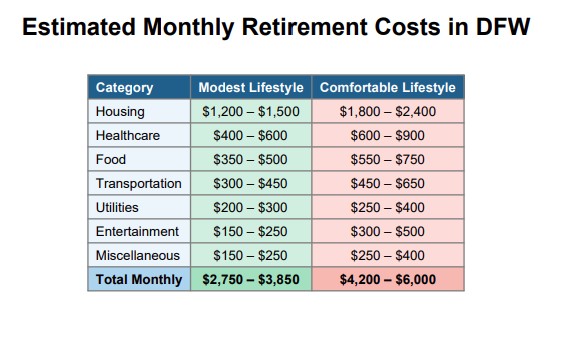
Below is a realistic monthly retirement budget based on current DFW data:
Estimated Monthly Retirement Costs in DFW
What That Means Annually
- Modest retirement: about $33,000 to $46,000 per year
- Comfortable retirement: about $50,000 to $72,000 per year
These numbers align closely with national retiree spending, which averages around $60,000 annually .
A Closer Look at Hidden DFW Retirement Expenses
Housing & The Texas Over-65 Property Tax Exemption
Housing is the largest expense in Dallas Fort Worth. Rent for a one bedroom in nearby Fort Worth averages about $1,384 per month , while home prices sit around $330,000. Property taxes in Texas can be high, so even paid off homes still carry ongoing costs.
However, there is a massive silver lining for Texas retirees: the Over-65 Homestead Exemption. When you turn 65, Texas places a ‘ceiling’ on your school district property taxes. This means the amount you pay to the school district is frozen and will not increase, even if your home’s appraised value continues to rise. For retirees living in high-property-value areas like Southlake, Keller, or Colleyville, utilizing this exemption is one of the most powerful planning levers available to permanently control long-term housing costs.
Transportation and NTTA Toll Costs
Texas cities like Dallas and Fort Worth rely heavily on cars. Gas, insurance, and maintenance are essential monthly expenses. Transportation costs still run slightly below the national average, which helps offset housing.
However, an often-overlooked budget item for active DFW retirees is toll roads. Navigating between cities to visit grandchildren, access country clubs, or reach DFW Airport often requires regular use of the Dallas North Tollway (DNT), State Highway 121, or Highway 114. Factoring a monthly NTTA TollTag into your budget is a mandatory reality for experiencing everything the metroplex has to offer without the stress of constant traffic.
Healthcare Access and Coverage
Healthcare becomes one of the fastest growing expenses in retirement. In DFW, typical monthly healthcare costs range from $400 to $900 depending on coverage and health status . Long term care can significantly increase your total budget.
The distinct advantage of retiring in Dallas-Fort Worth, however, is the quality and proximity of care. Rather than incurring travel and lodging costs to fly out of state for specialized treatments, DFW residents have immediate access to world-class medical networks right in their backyard. With institutions like Texas Health Resources, Baylor Scott & White, and UT Southwestern just a short drive away, retirees benefit from premier healthcare access that protects both their physical well-being and their wallets.
Everyday living remains manageable
Groceries and utilities in North Texas remain relatively stable compared to national averages. A single adult in Dallas spends about $1,300 per month excluding rent , which keeps daily living affordable.
How Much Should You Actually Save for a DFW Retirement?
You can estimate your retirement target by matching your lifestyle to annual spending:
- Lean retirement in DFW
$35,000 per year → about $875,000 saved - Comfortable retirement in DFW
$60,000 per year → about $1.5 million saved - Higher end lifestyle
$70,000 plus → $1.75 million to $2 million plus
These ranges reflect the reality that big metro areas in Texas require more savings than smaller cities, even though the state remains relatively affordable overall.
Why Texas Still Works for High-Net-Worth Retirees
Texas continues to stand out for retirees because:
- No state income tax
- Lower housing costs than many large US cities
- Strong healthcare access in DFW
- Growing suburban options like Fort Worth, Arlington, and surrounding areas
However, do not underestimate property taxes, healthcare, and inflation. These factors can quietly increase your retirement budget over time.
Final Takeaway
You can retire comfortably in Texas, but your number depends on where and how you want to live. In Dallas Fort Worth, most retirees need between $900,000 and $1.5 million for a stable and enjoyable retirement, with higher targets for more flexibility.
DFW offers a balance. It is more affordable than coastal cities but more expensive than rural Texas. If you plan carefully and account for real costs, you can build a retirement that feels both secure and fulfilling in the Lone Star State.
Do you have enough to retire securely in DFW? Stop guessing your number. Schedule a Retirement Income Review with our Southlake-based advisory team today.